“Latest European Commission Projections Highlight Italy’s Slower Recovery and Expansion Compared to Wider European Union Trends.” Image by marco-oriolesi-unsplash
Italy’s Economic Outlook: Below EU Average Growth Forecasts
Latest European Commission Projections Highlight Italy’s Slower Recovery and Expansion Compared to Wider European Union Trends.
Lucas Bruni 10 June 2025
The European Commission has released its latest economic growth forecasts, indicating a discernible pattern: Italy’s anticipated growth rates continue to lag behind the average for the European Union. These projections offer a current snapshot of the economic health across member states, drawing particular attention to the differing paces of recovery and expansion within the bloc.
For the current period, Italy is expected to achieve a growth rate that positions it among the lower performers within the EU. This outlook is a continuation of trends observed in previous forecasts, suggesting persistent challenges in accelerating economic activity to match its European counterparts. The Commission’s analysis takes into account various factors influencing national economies, including internal demand, investment levels, and the broader international economic climate.
Comparative data within the report underscores how Italy’s trajectory contrasts with more robust performances seen in several other major European economies. While the overall EU growth is projected to maintain a steady, albeit moderate, pace, Italy’s contribution remains a key point of evaluation. This disparity is attributed to a combination of structural factors and specific national economic dynamics that influence productivity and overall output.
The implications of these forecasts are significant for national policy discussions. Slower growth can affect employment, public finances, and the capacity for long-term development. As the European Union collectively navigates evolving economic landscapes, the performance of individual large economies like Italy remains a critical component of the continent’s overall economic stability and future prospects.
“Italy grapples with billions in uncollected criminal fines, revealing significant gaps in justice and accountability.” Image by towfiqu-barbhuiya-unsplash
Italy Grapples with Billions in Uncollected Criminal Fines
A Deep Dive into the Systemic Failures Preventing Effective Penalty Recovery Reveals Significant Gaps in Justice and Accountability.
by George David 10 June 2025
Across Italy, a substantial and persistent problem of uncollected criminal penalties has left billions of euros owed to the State. Statistics indicate that nearly a quarter of all criminal convictions are met solely with monetary fines, applying to offenses such as minor personal injuries resulting from negligence, petty theft, and various workplace safety violations. Meanwhile, half of all adjudicated crimes carry dual punishments, combining imprisonment with a financial penalty, covering more serious offenses like drug trafficking, robbery, fraud, money laundering, and embezzlement. Between 2019 and 2022 alone, courts imposed fines totaling an immense 3.2 billion euros. However, the Italian State’s actual recovery from these substantial penalties amounted to a mere 86.3 million euros, marking an approximate collection rate of just 3 percent. This striking discrepancy, consistent over decades, means that for every 100 euros owed, only three are effectively collected, rendering numerous court judgments without practical consequence.
This systemic failure is largely attributed to a bureaucratic process that has frequently left justice paralyzed. Once a criminal sentence is finalized, the judicial execution registry logs the monetary obligations. The file then moves to Equitalia Giustizia, a state-controlled entity under the Ministry of Economy and Finance, which quantifies and formally registers the debt. Subsequently, the Tax Agency-Collection issues the tax bill. This multi-stage procedure is subject to a strict five-year expiration period from the sentence date, often resulting in the nullification of uncollected debts. This procedural bottleneck has led the Constitutional Court to question the credibility of monetary penalties as a viable alternative to incarceration in Italy.
In an effort to overhaul this cumbersome system, the Cartabia reform was enacted in October 2022. For crimes committed after December 30, 2022, this reform introduced a more direct collection mechanism. Under the new guidelines, the public prosecutor now issues a direct order to the convicted person to pay the fine within 90 days via a PagoPA form. Should payment not be made, the supervisory magistrate is empowered to convert the unpaid fine into alternative penalties, such as semi-liberty or community service. Early data suggests this reformed approach has led to improved collection rates, representing a step forward. Yet, for Italy to achieve collection percentages on par with other developed nations, a significant expansion of staff within the supervisory magistrate’s offices is deemed essential for effectively converting these unpaid fines.
Despite the recent reforms, specific challenges continue to impede full recovery. Cases involving smuggling, for instance, remain particularly complex, even under the new Cartabia procedures for customs offenses. A primary hurdle is the frequent difficulty in tracing foreign offenders, who often become untraceable. Furthermore, the Cartabia reform notably excluded the bureaucratic framework for legal expenses from its streamlining efforts. These costs continue to be handled as standard credits, transferred to the Tax Agency-Collection for recovery through conventional means. A more efficient alternative, as suggested by experts, would be to quantify these legal expenses directly within the original sentence itself, establishing fixed, quickly payable amounts. The ongoing failure to collect the vast majority of these imposed penalties places a significant financial burden on the wider community, effectively forcing citizens to bear the cost of unpunished crimes and legal inefficiencies.
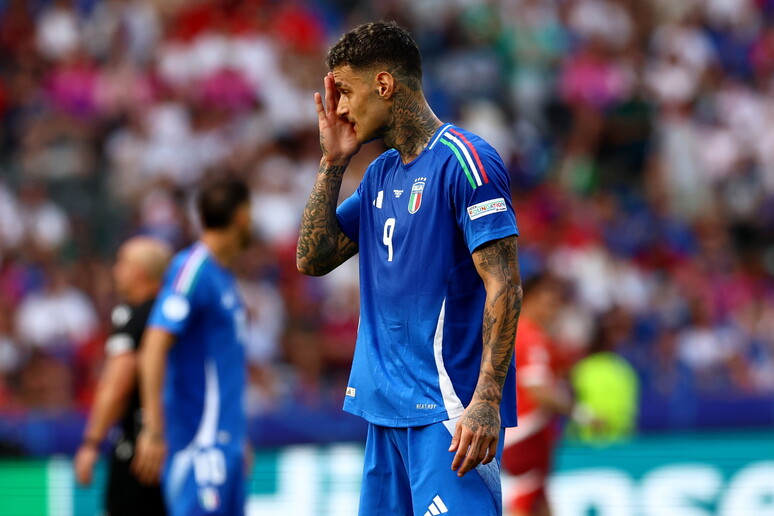
taly secured a 2-0 victory against Moldova in their World Cup qualifier on Monday, with goals from Scamacca and Cambiaso. This win brings crucial points for the Azzurri’s campaign. Image by Ansa
Italy Secures Decisive Victory in World Cup Qualifier
Two Crucial Goals From Raspadori and Cambiaso Propel Azzurri Past Moldova, Bolstering Their Campaign Standings on Monday.
by Don Markson 10 June 2025
The Italian national football team achieved a significant 2-0 triumph over Moldova in their latest World Cup Qualifying match, played on Monday. This victory is a pivotal moment for the Azzurri, as it secures three essential points, directly contributing to their ongoing progression in the 2026 FIFA World Cup qualification tournament. The result was a clear demonstration of Italy’s efforts in their pursuit of a spot in the global football event.
The scoring for the Italian side came courtesy of Giacomo Raspadori and Andrea Cambiaso, whose contributions directly led to the 2-0 scoreline. Both players found the back of the net, ensuring the team’s lead and ultimately sealing the win. Their goals were central to securing the desired outcome from the encounter, highlighting their effectiveness within the match’s framework.
The performance delivered by the Italian squad was noted as a convincing one, characterized by a determined effort throughout the game. This strong display allowed the team to achieve its objective of securing a victory against Moldova. The positive result is of considerable importance for Italy’s current standing within their qualification group, providing a beneficial boost as the tournament progresses.
This win is critical for the standings in the ongoing qualifiers. Each point gained plays a vital role in determining a nation’s position and its path toward securing a place in the prestigious World Cup. The Azzurri’s successful outing against Moldova marks a constructive step forward in their campaign, aligning with their broader goals for the qualification period. The team will now look to build upon this performance as they continue their journey.
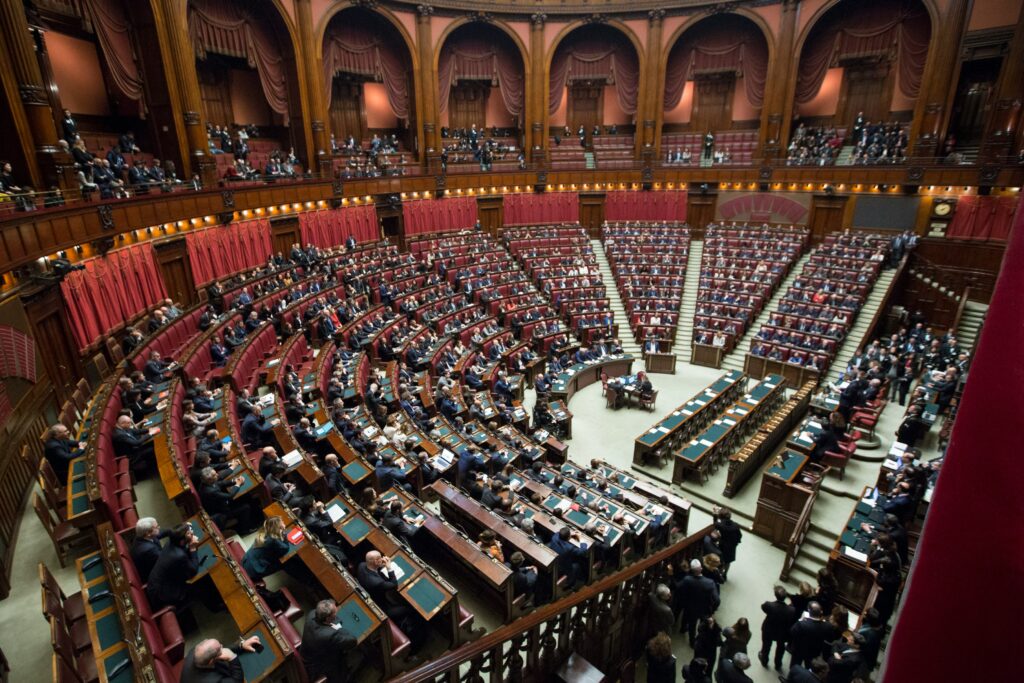
“The political consequences of the final results, particularly if the quorum threshold is indeed not reached, are anticipated to be substantial.” Image by Ansa
National Referendum Concludes: Quorum Question Dominates Outcome
With ballots cast and voting now closed, the validity of the 2025 referendum hinges on voter turnout, as preliminary figures suggest potential implications for national policy.
by Claire Peters 10 June 2025
The 2025 national referendum has officially concluded, with all voting operations having ceased at 3 PM on Sunday. The immediate focus has now shifted entirely to the compilation and announcement of the definitive results, particularly concerning whether the legally mandated participation threshold, known as the quorum, has been successfully reached. For the referendum’s outcome to hold legal validity, at least 50% plus one of all eligible voters must have cast a ballot.
Initial data being released indicates that overall voter turnout may fall below this crucial quorum requirement. Should these preliminary figures hold true in the final count, the implication is that the referendum’s outcome, irrespective of the percentages for or against the various proposals, would not carry legal force due to insufficient public participation. The Ministry of Interior is expected to release the conclusive results in the coming hours, which will provide a clear confirmation of the total citizen involvement.
The issues presented for public decision in this referendum encompassed a range of significant national topics. These included proposed reforms to electoral law, adjustments within the justice system, and specific new provisions pertaining to labor regulations. Throughout the campaigning period, proponents of the referendum actively advocated for a high voter turnout, emphasizing the importance of direct citizen engagement in shaping national policies. Conversely, those opposing the referendum’s initiatives often pursued a strategy of encouraging abstention, aiming to prevent the quorum from being met and thereby invalidating the vote.
The political consequences of the final results, particularly if the quorum threshold is indeed not reached, are anticipated to be substantial. In such a scenario, the proposed changes, regardless of how they were voted upon by those who participated, would not be enacted. This outcome would provide a reflection of either a broader public disengagement from direct democracy tools or a successful implementation of the abstention strategy by opponents. The forthcoming official data will offer a comprehensive overview of citizen involvement and the public’s response to the contested issues.
“An increasing number of Italian citizens are choosing to relocate to Spain, a movement influenced by economic factors and lifestyle considerations in both nations.” Image by tomas-nozina-unsplash
Italy’s Outward Shift: A Growing Trend Towards Spain
An increasing number of Italian citizens are choosing to relocate to Spain, a movement influenced by economic factors and lifestyle considerations in both nations.
by Anne Martin 10 June 2025
A notable trend indicates that more individuals are migrating from Italy to Spain. This demographic shift highlights evolving preferences and economic conditions affecting residents within Italy. The movement signifies a significant choice for many seeking new opportunities and different living environments outside their native country.
Spain has emerged as a favored destination for these Italian expatriates. Factors contributing to this preference include the availability of job opportunities, a perceived higher quality of life, and an economic climate considered more favorable. Conversely, this migratory pattern also underscores existing challenges within Italy, such as limited job prospects, the impact of bureaucratic processes, and a comparatively high cost of living. These elements collectively act as incentives for individuals considering relocation.
Official data sources, including national statistics offices, consistently confirm the sustained increase in the number of Italian citizens choosing to live abroad. This phenomenon encompasses a broad spectrum of global destinations, with Spain accounting for a substantial portion of this ongoing outward movement. The data reflects a steady progression of individuals seeking new foundations beyond Italy’s borders.
An additional factor facilitating this transition is the cultural and linguistic similarity between Italy and Spain. These commonalities often contribute to an easier process of integration for new arrivals, aiding in their adaptation to the new country. The long-term implications of this continued emigration for Italy include potential effects on its demographic structure and the departure of skilled professionals, often referred to as ‘brain drain’.
“As the Italian national team prepares for its vital clash with Moldova, the match tonight marks a significant step in their campaign towards global football’s pinnacle.” Image by Ansa.
Italy Embarks on Crucial World Cup Qualifier Against Moldova
As the Italian national team prepares for its vital clash with Moldova, the match tonight marks a significant step in their campaign towards global football’s pinnacle.
by Ari Sreindehelder 9 June 2025
Tonight, Tuesday, June 9, the Italian national football team is set to compete against Moldova in a World Cup qualifying match. The encounter is scheduled to kick off at 8:45 PM and will be broadcast live on Rai 1, with streaming available through RaiPlay, providing comprehensive coverage for fans across the nation.
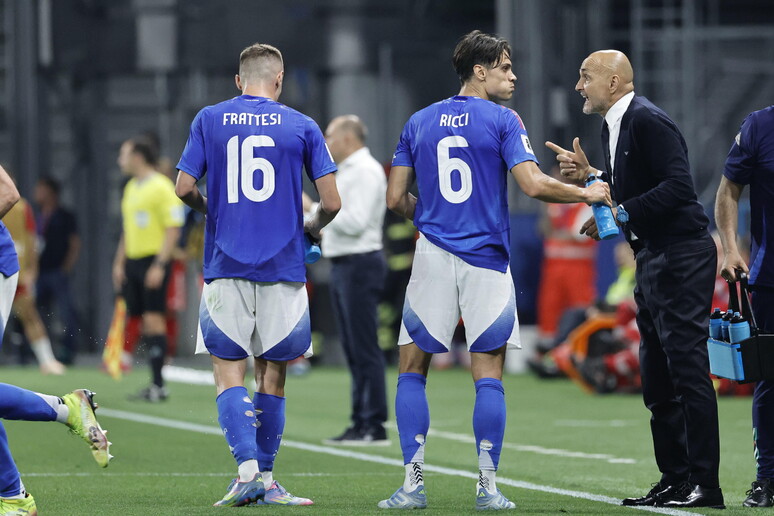
This fixture represents an important evaluation point for the Azzurri as they progress through their official commitments. Under the guidance of Coach Luciano Spalletti, the team is expected to feature an experimental lineup. This strategic decision aims to provide opportunities for players who have had limited recent playing time, alongside promising young talents. The primary objectives are to assess the overall condition of the squad and to test various new tactical formations in a competitive environment.
For the Moldovan national team, this match offers a significant opportunity. Despite a considerable technical disparity between the two sides, facing a top-tier national team like Italy provides invaluable experience. Moldova is anticipated to adopt a defensive approach, with a primary focus on executing counter-attacking maneuvers throughout the game.
The probable starting lineups for both teams are as follows:
ITALIA (4-3-3): Donnarumma; Di Lorenzo, Bastoni, Acerbi, Dimarco; Barella, Jorginho, Frattesi; Chiesa, Scamacca, Pellegrini.
A key figure in managing the match flow will be the referee, whose role is essential in ensuring fair play and preventing unnecessary physical contact that could lead to injuries. Fans across the country are keenly awaiting the match, anticipating a strong and decisive performance from their national side in this critical qualifier.
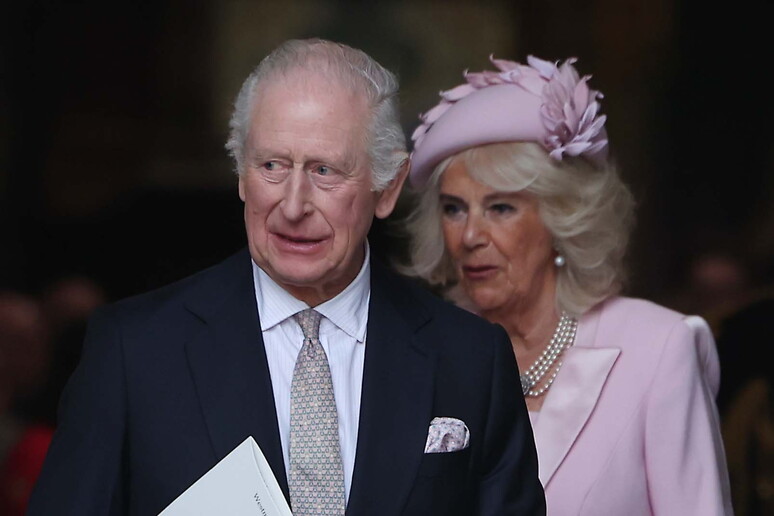
“As whispers intensify around the health of a reigning monarch, the British Crown finds itself in an unwelcome spotlight, forcing a nation to confront the hidden costs of inherited power and the profound human complexities masked by centuries of tradition.” Image by lea-fabienne-unsplash
The Crown’s Crucible: When Mortal Vulnerability Collides with Immortal Duty
As whispers intensify around the health of a reigning monarch, the British Crown finds itself in an unwelcome spotlight, forcing a nation to confront the hidden costs of inherited power and the profound human complexities masked by centuries of tradition.
by Ari Steindwelder 9 June 2025
The ancient machinery of the British monarchy, an institution meticulously crafted from centuries of tradition and unwavering public spectacle, now grinds forward under the shadow of unsettling whispers. King Charles III’s health, shrouded in official discretion and the terse confirmations from Buckingham Palace, has become a focal point for intense global speculation. While a cancer diagnosis has been acknowledged, the deliberate opacity surrounding its severity and prognosis has inevitably fueled a relentless tide of rumors, including the chilling suggestion of an “incurable” condition. This calculated ambiguity, whether intended to protect privacy or manage public perception, invariably pulls the intricate tapestry of royal succession into stark relief, fixing an unwavering gaze upon the prepared figures of Prince William and Catherine, the Princess of Wales.
At the heart of this unfolding drama lies a profound ethical paradox: the inherent tension between the fundamental human right to privacy, especially concerning personal health, and the relentless, all-encompassing demands of public duty placed upon a sovereign. How much of a monarch’s personal suffering belongs to the public domain? The institution’s commitment to continuity and stability is paramount, yet its very survival often hinges on maintaining a facade of inscrutability. This ethical tightrope walk often means individual human vulnerabilities are subsumed by the monumental weight of the Crown, raising critical questions about the compassion and transparency afforded to those who serve at such an elevated, yet deeply personal, cost.
For Prince William, the heir apparent, and his wife, Catherine, the Princess of Wales, the King’s health crisis translates into an accelerated immersion into a destiny long foretold but now seemingly fast-tracked. Their increasingly prominent public engagements are not merely ceremonial duties; they are rehearsals for a role laden with immense psychological and emotional burdens. The unspoken question hangs heavy: what is the human toll of being perpetually “ready” for an unscheduled ascension to a throne that demands every fiber of one’s being? Their lives, meticulously choreographed for public consumption, offer little respite from the relentless expectations, probing the very essence of human resilience when private grief must be performed as public stoicism.
The media’s relentless gaze, a constant companion to the Royal Family, intensifies to an almost predatory focus during such moments of vulnerability. Every carefully worded statement, every fleeting public appearance, becomes fodder for exhaustive dissection, scrutinised for the faintest clue regarding the King’s condition or the precise mechanics of succession. This dynamic raises critical questions about the ethical responsibilities of those who disseminate information: when does the public’s understandable fascination with its head of state cross into an intrusive violation of individual privacy? The ongoing saga of the monarchy, a curious blend of archaic reverence and contemporary obsession, continues to captivate, yet it simultaneously exposes the raw human element beneath the gilded facade, compelling a reflection on the very nature of inherited power in an age that supposedly champions individual autonomy.
As the world awaits further updates, the current interregnum serves as a poignant reminder that even figures elevated to the pinnacle of public duty are ultimately mortal. The unfolding narrative invites a deeper contemplation of the modern monarchy’s place in a democratic world: its enduring appeal, its sometimes perplexing opaqueness, and the profound human sacrifices demanded of those born into its unique and unforgiving crucible. The Crown’s next chapter, born from personal vulnerability, will undoubtedly force a collective reckoning with the true weight of its gold.
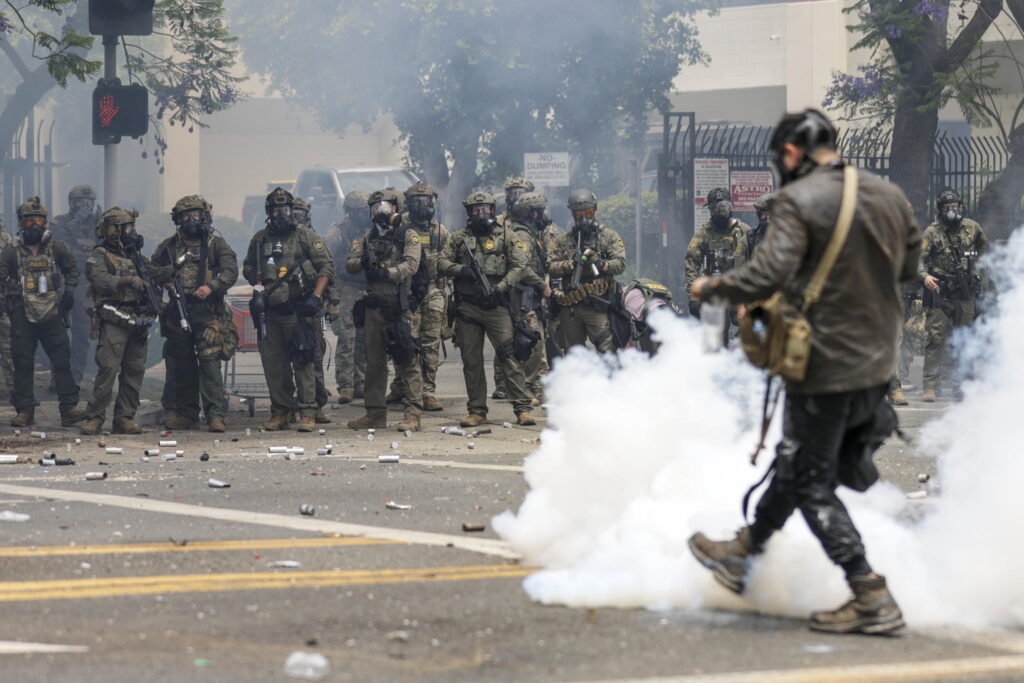
“The Los Angeles incidents are not isolated occurrences but stark indicators of a fragile social fabric, particularly in areas where demographic shifts and economic pressures intersect with a highly charged political climate.” Image by Ansa
Echoes of Discord: When Political Rhetoric Fractures a Nation’s Soul
As localized unrest ripples through a major American city, the raw reality of clashes highlights the dangerous interplay between inflammatory discourse and a deepening societal fissure, exposing the profound human cost of a nation’s unresolved immigration debate.by
by Don Markson 9 June 2025
The vibrant tapestry of Los Angeles, a city synonymous with diversity and dynamic change, finds itself subtly frayed by recent incidents of localized unrest involving segments of its migrant population. These events, though contained in scope, serve as a potent, unsettling reminder of the profound fault lines running through the American social landscape, brutally pushing the contentious issue of immigration back into the unforgiving glare of national debate. The timing is acutely sensitive, occurring amidst an escalating national conversation about border integrity and the very fabric of identity, revealing how swiftly abstract political arguments can ignite tangible discord on urban streets.
Into this already combustible atmosphere steps President Donald Trump, whose pronouncements on immigration have long been characterized by their uncompromising and often incendiary nature. His recent interventions, delivered from the rally stage, have been widely criticized for their perceived role in fanning the flames of division and, more critically, for casting a stigmatizing shadow over entire migrant communities. This raises a pressing ethical question about the responsibility of political figures: does the pursuit of electoral advantage justify rhetoric that risks fracturing social cohesion and potentially inciting animosity towards vulnerable populations? While supporters argue he merely echoes public concern about border control, the impact of such language on the human experience is undeniable, transforming policy debates into deeply personal grievances.
The clashes themselves, involving relatively small groups, carry a disproportionately large symbolic weight, acting as stark manifestations of underlying tensions that fester in diverse urban centers. While local authorities diligently strive to comprehend the intricate dynamics and pre-empt any further escalation, the broader societal response reveals a deeply polarized nation. Community leaders and civil rights advocates, acutely aware of the perilous precipice upon which society stands, issue fervent pleas for calm and champion the urgent necessity of constructive dialogue. Their warnings against rhetoric that could inadvertently—or intentionally—incite hatred or violence underscore a critical understanding: that the complex socioeconomic factors underpinning these urban frictions demand nuanced solutions, not simplistic, often dehumanizing, political soundbites.
The immigration debate in the United States remains a crucible of contending ideologies, a relentless battleground of narratives that consistently push the nation to its limits of social cohesion. The Los Angeles incidents are not isolated occurrences but stark indicators of a fragile social fabric, particularly in areas where demographic shifts and economic pressures intersect with a highly charged political climate. They illuminate the astonishing power of political discourse to shape, and often distort, public sentiment, turning neighbor against neighbor. As the country navigates the treacherous waters towards crucial elections, the rhetoric surrounding immigration is poised to intensify further, promising potentially profound and lasting implications for the integrity of its social bonds and, most critically, for the lived realities of millions of human beings caught in the crosscurrents of political expediency.
“As a vessel of humanitarian resolve sails toward the besieged Gaza Strip, its imminent interception by military forces casts a stark spotlight on the profound ethical quandaries of prolonged blockades and the agonizing human cost borne by a captive population.” Image by Ansa
A Beacon of Aid Meets an Implacable Wall: Gaza’s Desperate Plea Confronts Naval Authority
As a vessel of humanitarian resolve sails toward the besieged Gaza Strip, its imminent interception by military forces casts a stark spotlight on the profound ethical quandaries of prolonged blockades and the agonizing human cost borne by a captive population.
by George David 9 June 2025
In a world perpetually grappling with geopolitical tensions and the silent toll of distant conflicts, the voyage of the humanitarian ship ‘Madleen’ stands as a poignant act of global conscience. Laden with critical aid and propelled by the unwavering dedication of international activists, including the renowned environmental advocate Greta Thunberg, this vessel is more than just a cargo carrier; it is a moving symbol of defiance against an enduring siege. As it nears the desolate shores of Gaza, its path is set to intersect with a formidable naval presence, initiating a direct confrontation that starkly encapsulates the pervasive dilemma between asserted national security and the desperate cries of humanity.
The very essence of the ‘Madleen’s mission is rooted in an unshakeable belief in universal compassion and the imperative to alleviate suffering. The activists on board, representing a diverse spectrum of global citizens, are driven by a singular, moral purpose: to deliver life-sustaining aid directly to a population teetering on the brink of collapse. Their courage in sailing towards a known point of contention underscores a profound commitment to principles of justice and human dignity, making a clear, powerful statement about the right to humanitarian access in the face of overwhelming odds. Their journey implicitly challenges the conscience of a global community often too slow to act.
However, this civilian humanitarian endeavor is met with an equally unwavering state resolve. Israeli military forces are poised to intercept the ‘Madleen’, asserting their determination to enforce a naval blockade over Gaza, citing security concerns and the imperative to prevent arms smuggling. This stark contrast – between humanitarian intent and military enforcement – foregrounds deeply unsettling ethical questions about the proportionality of such measures and the legality of restricting vital supplies to a civilian populace. It compels international bodies and sovereign nations alike to confront their obligations under humanitarian law, particularly concerning the dire consequences for innocent lives trapped within a besieged territory.
The humanitarian organizers vehemently underscore the purely non-military nature of their mission, simultaneously condemning the blockade as illegal under international statutes. Their voices echo the increasingly urgent pleas from numerous international organizations and human rights groups, all of whom consistently highlight the catastrophic reality within the Gaza Strip. The region is battling an unprecedented humanitarian crisis, characterized by a severe and systemic shortage of food, potable water, essential medicines, and other fundamental necessities for survival. The direct outcome is a harrowing landscape of escalating malnutrition, rampant disease, and a tragic surge in preventable deaths, with children disproportionately bearing the brunt of this deliberate deprivation.
The presence of a figure like Greta Thunberg on board has undeniably magnified the international spotlight on the flotilla’s objectives and the agonizing humanitarian situation in Gaza. Her participation transcends mere celebrity endorsement; it transforms the mission into a global clarion call, drawing widespread attention to the dire conditions within the beleaguered territory and demanding a renewed reckoning from the international community. As warnings are reportedly issued to the ship, the world watches with bated breath, awaiting the precise unfolding of this direct collision between the unyielding force of state policy and the universal appeal of human compassion. The outcome of this immediate tension will inevitably reignite urgent conversations about the human cost of prolonged sieges in densely populated areas, and the global responsibility to ensure unimpeded humanitarian access where lives hang in the balance.
“As the nation holds its breath, the unexplained fate of its celebrated coach casts a pall of uncertainty over the future of Italian football, leaving a legacy in limbo and fans grasping for answers.” Image by Ansa
Italy’s Football Throne: A Shadowy Succession Amidst Lingering Questions
As the nation holds its breath, the unexplained fate of its celebrated coach casts a pall of uncertainty over the future of Italian football, leaving a legacy in limbo and fans grasping for answers.
by Claire Peters 9 June 2025
The hallowed halls of Italian football find themselves gripped by an unsettling quietude, a prelude to what is widely anticipated as a seismic announcement concerning the leadership of the national team. Luciano Spalletti, the tactical architect who, against many odds, steered the Azzurri to recent European glory, appears poised at a precarious crossroads. Whispers of a possible departure or an imminent public statement have rippled through the nation’s sporting consciousness, igniting a fervent mix of apprehension and speculation among its devoted followers and the ever-watchful sports media.
Spalletti’s tenure has been a study in contrasts, marked by both strategic brilliance and a character that often provoked strong reactions. His European triumph had momentarily silenced the most ardent critics, solidifying his stature. Yet, the current maelstrom swirling around his potential exit remains shrouded in ambiguity. The underlying reasons for this sudden crisis are conspicuously absent from public discourse, giving rise to a flurry of hypotheses. Are there deep-seated disagreements with the Italian Football Federation (FIGC) over the strategic blueprint for the future? Have unforeseen internal tensions fractured the team’s cohesion? Or are deeply personal matters compelling a reluctant step away from the fiercely competitive limelight? The lack of official clarity here is not merely a journalistic inconvenience; it raises fundamental questions about transparency and accountability in the governance of a national sporting institution that carries the hopes and pride of millions.
The FIGC, for its part, has contributed significantly to the climate of agitated conjecture through its resolute silence. President Gabriele Gravina’s scarce and evasive comments, offering vague assurances of impending clarification, have done little to quell the burgeoning anxiety. This institutional reticence, instead of fostering calm, has paradoxically amplified the public’s apprehension, particularly given the critical juncture the national team now faces, with crucial World Cup qualifying matches looming large on the horizon. The absence of forthright communication in moments of national sporting uncertainty raises concerns about the principles of openness and responsibility owed to a public whose emotional investment in the team is profound.
The consequences of this impending decision are not merely confined to the tactical whiteboard or the management offices. They reverberate through the very fabric of Italian football. What will be the trajectory of a national team left without clear direction? Who possesses the leadership, vision, and moral fortitude to step into such a pivotal role? More profoundly, what psychological toll will this uncertainty exact on the morale of the players, who operate under immense national scrutiny? And, perhaps most significantly, how will this period of perplexing ambiguity impact the expectations and unwavering passion of millions of fans, whose national pride is intrinsically linked to the fate of their beloved Azzurri? The fluctuating performances observed in recent months only underscore the urgent need for decisive and transparent leadership.
The sports press, sensing the gravity of the unfolding drama, is in a state of frenzied pursuit, each outlet vying for the elusive detail that might unravel the mystery. Public opinion, predictably, remains sharply divided: a vocal segment passionately defends Spalletti’s achievements, demanding full and immediate transparency from a Federation perceived as opaque. Another faction, however, contends that a clean break might offer the necessary impetus for a revitalized start, hinting at underlying issues that only a change at the helm could address. The current situation remains fluid, imbued with a palpable sense of uncertainty, yet one truth stands irrefutable: the heart of Italian football collectively holds its breath, awaiting official pronouncements that will undeniably shape its immediate and long-term destiny.
To provide the best experiences, we use technologies like cookies to store and/or access device information. Consenting to these technologies will allow us to process data such as browsing behavior or unique IDs on this site. Not consenting or withdrawing consent, may adversely affect certain features and functions.
Functional
Always active
The technical storage or access is strictly necessary for the legitimate purpose of enabling the use of a specific service explicitly requested by the subscriber or user, or for the sole purpose of carrying out the transmission of a communication over an electronic communications network.
Preferences
The technical storage or access is necessary for the legitimate purpose of storing preferences that are not requested by the subscriber or user.
Statistics
The technical storage or access that is used exclusively for statistical purposes.The technical storage or access that is used exclusively for anonymous statistical purposes. Without a subpoena, voluntary compliance on the part of your Internet Service Provider, or additional records from a third party, information stored or retrieved for this purpose alone cannot usually be used to identify you.
Marketing
The technical storage or access is required to create user profiles to send advertising, or to track the user on a website or across several websites for similar marketing purposes.