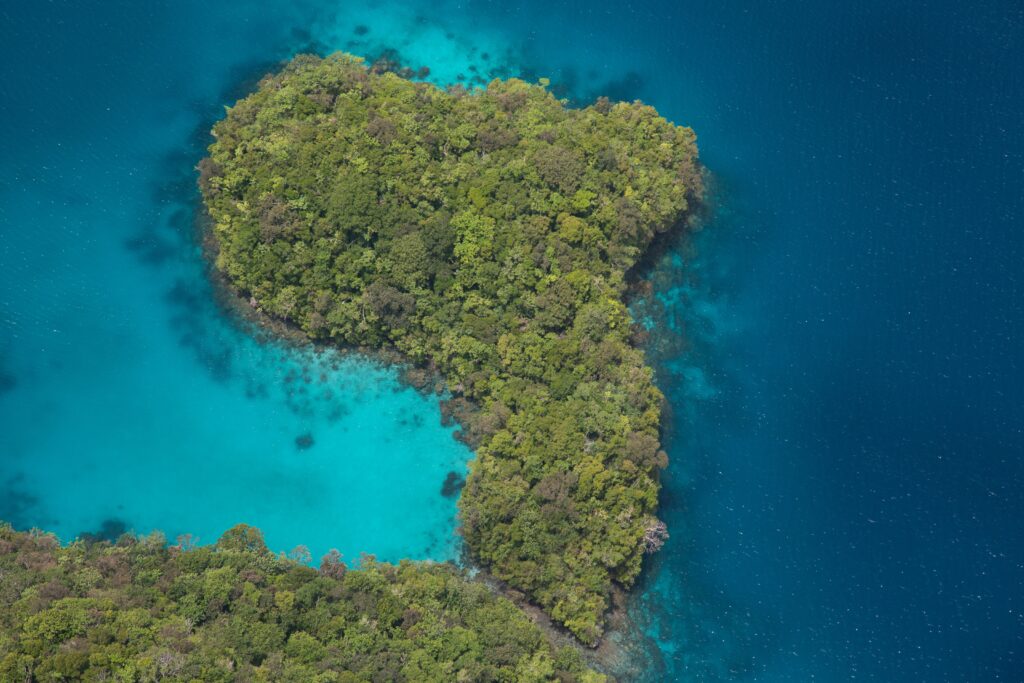
A deep look at the forces, strategies, and human stories shaping Palau’s delicate position between the US, China, and Taiwan. Image by kurt-cotoaga-unsplash
Chinese Land, US Radar, and Ties to Taiwan: The Geopolitics Rattling a Tiny Pacific Nation
The delicate balance of power, influence, and human lives in Palau illustrates how global ambitions shape even the smallest corners of the world.
by Michael Lamonaca, 25 November 2025
The air above Palau’s lagoons carries the scent of salt and breadfruit, and in Koror, the hum of dive boats once signaled prosperity. In 2015–2017, Chinese tourists made up half of the visitors, filling hotels and restaurants, and prompting local entrepreneurs to expand fleets of boats to meet demand. That sudden boom collapsed abruptly in 2017, when Beijing reportedly ordered operators to halt travel packages to Palau, cutting off the main source of tourism. Locals interpreted this as leverage to sway Palau from recognizing Taiwan, a diplomatic stance Beijing has long opposed, turning the islands’ economy into a pawn in a geopolitical contest. The environmental impact of mass tourism was severe, with coral reefs damaged by uncontrolled foot traffic and boats crowding fragile coves, a silent reminder of the costs embedded in strategic manipulation.
Palau’s historical ties to Taiwan and the United States position it uniquely in the Pacific. After independence in 1994, Palau formed close relations with Taiwan, benefiting from scholarships, medical support, and agricultural expertise. The US, under the Compact of Free Association, secured exclusive military access and extended economic aid, embedding the islands into broader strategic calculations. Today, the Second Island Chain makes Palau a critical observation point for monitoring China’s military expansion, drawing Washington into local planning and infrastructure projects. Chinese businesses leasing land near US radar sites and Tacmor installations—intended to monitor regional military movements—have fueled suspicion that civilian investment may mask strategic intent, highlighting the tension between commercial development and national security.
The human layer of this geopolitical equation reveals the interplay of local agency and external pressure. Palauans like President Surangel Whipps Jr. navigate competing demands: safeguarding sovereignty, maintaining diplomatic relations with Taiwan, and negotiating the consequences of military infrastructure expansion. Some locals dispute claims that China has “weaponized” tourism, framing it instead as standard diplomatic negotiation. Yet the economic and social impact of these moves—idle boats, fluctuating hotel occupancy, and disrupted livelihoods—demonstrates how high-level strategy cascades down into the daily lives of ordinary citizens. Environmental consequences compound the challenge, as sudden tourism surges strain fragile ecosystems, creating conflicts between economic opportunity and ecological preservation.
Criminal activity further complicates the archipelago’s position. Chinese-linked organized crime, from scamming and illegal casinos to cyberattacks, has proliferated in Palau since 2018, exploiting the lack of diplomatic ties and regulatory oversight. The US Treasury sanctions highlight individuals connected to Chinese conglomerates accused of trafficking, money laundering, and human exploitation. The interaction of these criminal networks with the geopolitical chessboard intensifies the pressure on local authorities, forcing them to respond to both foreign influence and internal security challenges. Palauans face a constant balancing act, where global ambitions, economic realities, and environmental stewardship intersect in a fragile equilibrium.
Ultimately, Palau’s experience exemplifies how small nations exist at the crossroads of power, influence, and human consequence. The island’s relationship with Taiwan, the US military presence, Chinese investment, and transnational crime illustrates a multi-layered system in which strategic imperatives intersect with human choices. Observers seeking clarity must trace the unseen mechanics—the levers of influence, the incentives shaping behavior, and the narratives that legitimize action. The island nation’s story underscores that understanding geopolitics requires attention not only to military and economic maneuvers but also to the human and ecological dimensions that render abstract strategies tangible and consequential.
Tags: #Palau #Taiwan #USMilitary #ChinaInfluence #PacificGeopolitics #EnvironmentalImpact #Tourism #TransnationalCrime #HumanLayer #UnseenMechanics